No coding background. A job, a family, maybe a mortgage. That’s a normal starting point at //kood. In 15 months you learn to build real products with AI, alongside people who started where you are.
The test is free and takes 30 minutes on your phone. Selection Sprint 23 runs from 18 January to 5 February 2027 in Jõhvi, Võru and Paide.
You learn to build real products, with AI as your tool
At //kood you train as an AI-Ready Product Engineer. You work out what a product needs, let AI take on the routine code and stay responsible for what ships. Companies hire for that judgement.
That’s where most people here started.
You don’t need to know what code looks like yet. The test is a 30-minute logic game with no code in it, and the Selection Sprint starts from the very first line. AI helps you from day one, and you learn to check what it gives you.
You’ve seen some code. Now you build whole products.
Maybe it was a course at school, a YouTube tutorial or a chatbot writing code for you. At //kood you build complete products in a team, use AI to move faster and learn why the code works, so you can fix it when it breaks.
Your head start counts, and the projects get hard fast.
You’ll recognise the basics in the Sprint. After that you build products you can explain, review and run, with AI handling the routine code. That’s what the employers we interviewed asked for. You work alongside people from very different backgrounds, the way real product teams do.
Back-end, user-facing products and AI-powered systems
You review AI-written code and defend your choices
Want to be safe from the next layoff? Sign up. Module 2 of the //kood curriculum opens to experienced developers soon.
Module 2, AI-Ready Product Engineering, is the second part of our AI-Ready Product Engineer programme (up to 9 months). It’s about the calls AI can’t make for you: scope, trade-offs and priorities. You build AI into real products, hand the routine work to agents and own the result. Your years of writing code are the head start.
When we interviewed people who applied to //kood, the same worries came up again and again. Pick your starting point and see the three that matter most.
I’ve never written a line of code.
You don’t need to. The first step is a 30-minute logic game that tests how you think, with no code in it. The Selection Sprint then starts from the very first line, and you learn by doing tasks that get harder bit by bit.
I’m too old to start over.
The average age at //kood is around 30 and most people come from non-tech jobs. Rain spent 11 years in the Navy before he switched. Employers we spoke to said career changers get up to speed faster, because they already know how to work.
I can’t afford to stop earning.
You don’t have to pay tuition up front. Pay in instalments, or start paying after you’re hired, once you earn more than the Estonian average salary. Your employer can also cover it. Do plan your living costs: the programme is full-time.
Shouldn’t I go to university instead?
You can do both, one after the other. //kood gives you a diploma and a portfolio of real projects. It isn’t an accredited degree, so if you want one later, //kood graduates can earn a BA at EBS in two years instead of three, and top graduates can apply to TalTech’s IT bachelor programmes under special conditions.
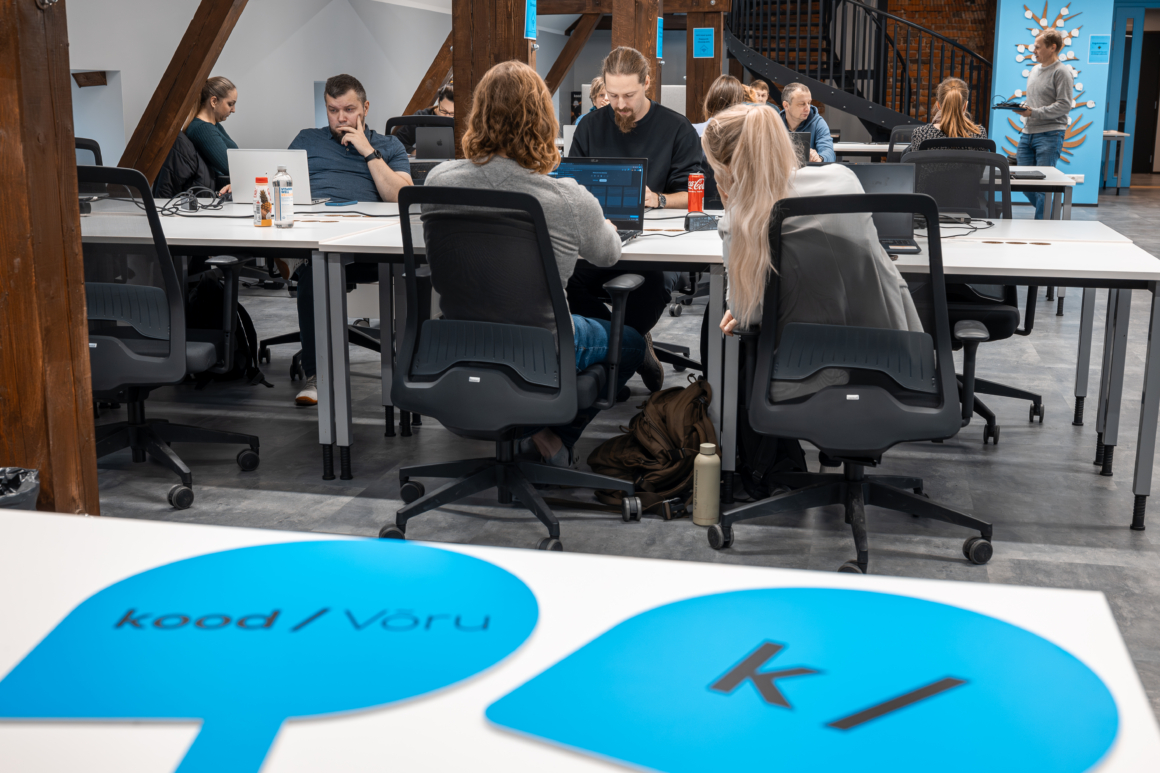
There are no teachers and no lectures. You learn with peers, review each other’s work and ask for help when you’re stuck. There’s always someone just as confused as you, and someone who cracked it an hour ago. Your only competition is yourself from yesterday.
Can’t I learn all this from YouTube and AI?
You can learn a lot that way, and you’ll keep using both here. On your own it’s hard to find people who review your code, projects with real deadlines and a portfolio employers trust. At //kood you get all three, with peers stuck on the same problems as you.
Won’t it be too easy for me?
You’ll move through the basics quickly. The Sprint tests how you solve problems and work in a team, and after that the projects grow into whole products: back-end services, user-facing apps and AI-powered systems. You also review other people’s code, and they review yours.
AI already writes my code. Why learn more?
Someone has to decide whether that code is any good. At //kood you use AI from the start and learn to review, test and explain what it writes. The employers we interviewed asked for exactly that judgement in the juniors they hire.
I have a job. Can I fit this in?
The Sprint asks for two weeks on site, Monday to Friday, 10:00–16:00. The third week is remote. After that you can study at a learning centre that’s open 24/7, from home, or a mix. People who combine studies with a job say it’s tough but possible.
I’ve written code for years. What’s left to learn?
Module 2 is about the calls you already make, with AI in the loop: what to build, what to cut, which trade-off to accept, and how to hand work to agents and check what comes back. It covers the whole shape of a modern system, from data and logic to interfaces, integrations and AI features.
Can’t I learn this myself with AI tools?
You can learn the tools on your own. Product judgement grows faster with people who question your decisions. In Module 2 you build real products with peers from different fields, and they review your choices as closely as you review theirs.
What does it cost, and when does it start?
In the full programme, Module 2 takes up to 9 months. We’ll send the price, schedule and format for experienced developers to everyone who signs up.
Applications close on 12 January 2027. This is the road from today to your first study day.
You, today1234Graduation, May 2028
You, today
1
Any time before 12.01.2027
Play the logic game
30 minutes on your phone or computer. It tests how you think, so there’s nothing to prepare and no code in it. You get three attempts and see your result straight away. Once you start an attempt, you can’t pause it.
An online session on how the Sprint works, costs and payment, accommodation and studies, with time for your questions. Everyone joins one before the Sprint. Can’t make it live? You can watch the recording.
Three weeks of real tasks with real people: two weeks on site in kood/Jõhvi, kood/Võru or kood/Järva in Paide, then one week remote. It’s the admission test, and your chance to find out if this way of learning suits you.
15 months later, in May 2028, you graduate as an AI-Ready Product Engineer.
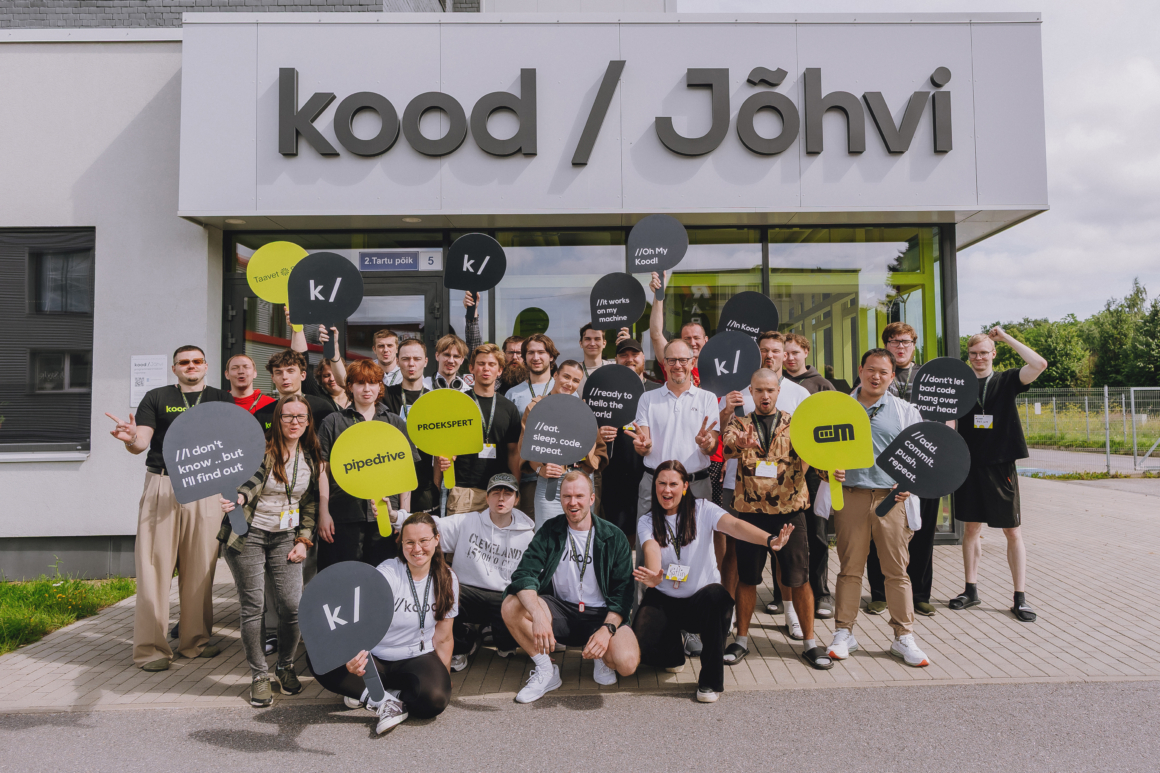
Your Sprint in kood/Jõhvi
Great if you’re from southern Estonia or Tartu, or have relatives nearby to visit. You study on the restored top floor of a historic bank building in Võru, with dorm rooms in close proximity.
Best if you want to dedicate yourself to learning technology at its core. There’s a spacious kood/Jõhvi dorm, and it’s the most advanced tech hub in the easternmost corner of Europe.
Great if you’re from Tallinn or Harjumaa (less than an hour away), or from central or western Estonia. kood/Järva is in Paide, with accommodation nearby.
The three weeks
18 January to 5 February 2027
Mon
Tue
Wed
Thu
Fri
Sat
Sun
18 January, on site
19, on site
20, on site
21, on site
22, on site, examexam
23, weekend team task
24, weekend team task
25, on site
26, on site
27, on site
28, on site
29, on site, examexam
30, weekend team task
31, weekend team task
1 February, remote
2, remote
3, remote
4, remote
5, last day, project demonstrationdemo
6, free
7, free
On site, 10:00–16:00
Weekend team task
Remote team week
Project demonstration
On Friday, 5 February, the Sprint ends with project demonstrations. Applications close on 12 January 2027.
79
Sprint NPS: 79
That’s how participants rated our summer 2026 Selection Sprint in kood/Jõhvi, kood/Võru and kood/Järva.
NPS (Net Promoter Score) runs from −100 to 100: the share of people who would recommend the Sprint to a friend, minus the share who wouldn’t.
They had other careers first
The Navy, ballet, a fire station. Five people on how they switched to tech.
Career changers get up to speed faster. They already know how to work, handle uncertainty and talk to people.
In early 2026 we interviewed 6 tech recruiters, 19 senior engineers and engineering managers, and 6 of our alumni. Career changers came up again and again as the juniors who grow fastest. Your earlier career counts; the code is the part you learn here.
Our alumni work at 190+ organisations, including
What it costs, in plain numbers
You only pay if you’re selected and start studying. Here’s the whole picture before you apply.
AI-Ready Product Engineer
4500 €
15 months / starts March 2027
Three ways to pay
Pay flexibly in instalments of 300 €/month. Or pay the full amount up front if you prefer.
Pay after you’re hired. With the Study Income Sharing Agreement (ISA) you start paying once you have a job and earn more than the Estonian average salary.
Your employer pays, up front or in instalments.
The ISA applies to the AI-Ready Product Engineer programme. Some conditions apply, for example if a //kood partner company hires you. Full pricing and ISA terms
Applying is free
The logic game, the info session and the three-week Selection Sprint cost nothing.
Coding fundamentals & back-end takes 6 months and costs 2500 €. Pay 300 € a month (payments continue after the 6 months until it’s paid), up front, or through your employer. You can continue into the full programme afterwards.
Rent one from our partner GreenDice from 7.90 € a month. It’s delivered in one business day.
Plan your living costs
The ISA covers tuition, not rent or food, and the programme is full-time. Work out how you’ll cover the 15 months, and bring your questions to an info session.
Ask your questions live
Everyone joins one info session before the Sprint. The //kood team walks you through the Sprint, the money side, accommodation and studies, and you can ask anything.
Starts in
–days–hours–min–sec
We’ll announce the dates in December. Join an online session now, or check back then.
Tap the ones you want answered, or write your own. No question is too basic here.
0 on your list
Nothing yet. Tap a question above to start your list.
Your list stays on this device.
The practical questions
Questions for
Picked on the route above. Switch here to see another learning centre.
I know how hard the Selection Sprint is. How do I prepare for that?
Clear your calendar first: two weeks on site, Monday to Friday, 10:00–16:00, weekend team tasks, and a remote third week. Ask for time off early. You don’t need to learn to code beforehand, because the Sprint starts from the very first line. What helps most is practice in figuring things out: try the coding tasks on this page, and when you’re stuck, search, ask and try again. Come rested, because the days are intense and your team counts on you. Sort out a room nearby or your bus times from Tartu before day one.
Where do I stay during the Sprint in kood/Võru, and how do I get there?
At kood/Võru there are dorm rooms close by. Buses run to Võru often from Tartu and other towns. Rooms are shared. Staying nearby isn’t required, but it makes it easier to work with your group.
What’s kood/Võru like?
kood/Võru is the second //kood learning centre. Võru City Government renovated the historic bank building for it, and you study on its restored top floor. The project was named Võru City’s Deed of the Year 2025.
I know how hard the Selection Sprint is. How do I prepare for that?
Clear your calendar first: two weeks on site, Monday to Friday, 10:00–16:00, weekend team tasks, and a remote third week. Ask for time off early. You don’t need to learn to code beforehand, because the Sprint starts from the very first line. What helps most is practice in figuring things out: try the coding tasks on this page, and when you’re stuck, search, ask and try again. Come rested, because the days are intense and your team counts on you. Book a room in the kood/Jõhvi dorm, so the two weeks go to the Sprint and not to the commute.
Where do I stay during the Sprint in kood/Jõhvi, and how do I get there?
You can stay in the spacious dorm in the kood/Jõhvi building. Trains and buses run to Jõhvi often, but most people stay in the dorm for the two on-site weeks. Rooms are shared.
What’s kood/Jõhvi like?
kood/Jõhvi is the first //kood learning centre, opened in 2021. You work on the 5th floor, the main working floor, and the building also has the dorm, a quiet area, a meeting room, a community area and a gym. Sprint exams take place in the exam room on the 3rd floor.
I know how hard the Selection Sprint is. How do I prepare for that?
Clear your calendar first: two weeks on site, Monday to Friday, 10:00–16:00, weekend team tasks, and a remote third week. Ask for time off early. You don’t need to learn to code beforehand, because the Sprint starts from the very first line. What helps most is practice in figuring things out: try the coding tasks on this page, and when you’re stuck, search, ask and try again. Come rested, because the days are intense and your team counts on you. Line up your carpool or the bus to Mäo, or book accommodation in Paide, before day one.
Where do I stay during the Sprint in kood/Järva, and how do I get there?
There is accommodation in Paide for kood/Järva. People usually carpool, and there’s now a new bus stop at Mäo, on the Tallinn–Tartu route, a short distance from Paide. Rooms are shared.
What’s kood/Järva like?
kood/Järva is the third //kood learning centre, on the newly renovated 3rd floor of the historic Keskväljak 15 building in Paide. You work in coding pods, four-desk hubs built for intensive coding and teamwork. It was named Järvamaa’s Deed of the Year 2025 and Learning Initiative of the Year 2025.
Who can apply?
Anyone who’s at least 18, has finished basic education (9 grades in Estonia) and speaks good English. You need to live in Estonia with a residence permit or be an EU citizen. You don’t need Estonian citizenship or any coding experience.
How good does my English need to be?
Studies are in English. An intermediate level is enough to get going, and your English improves as you work with others.
Can I keep my job during the Sprint?
The two on-site weeks run Monday to Friday, 10:00–16:00, so plan time off for those. The third week is remote. Ask your employer early: some companies cover the programme as part of their training budget.
Do I need my own laptop?
Yes, bring one to the Sprint. If you don’t have one, rent a laptop from our partner GreenDice from 7.90 € a month.
What if I don’t get in?
You leave with three weeks of real coding practice and a clear sense of whether this is for you. You can apply again for a later Selection Sprint.
Do I get a degree?
You get a //kood diploma and a portfolio of projects to show employers. //kood doesn’t award an accredited degree, because its model doesn’t fit the traditional definitions in Estonia.