Estonia’s top tech companies challenged future developers with real-life problems at kood/JobFair
02.04.2026
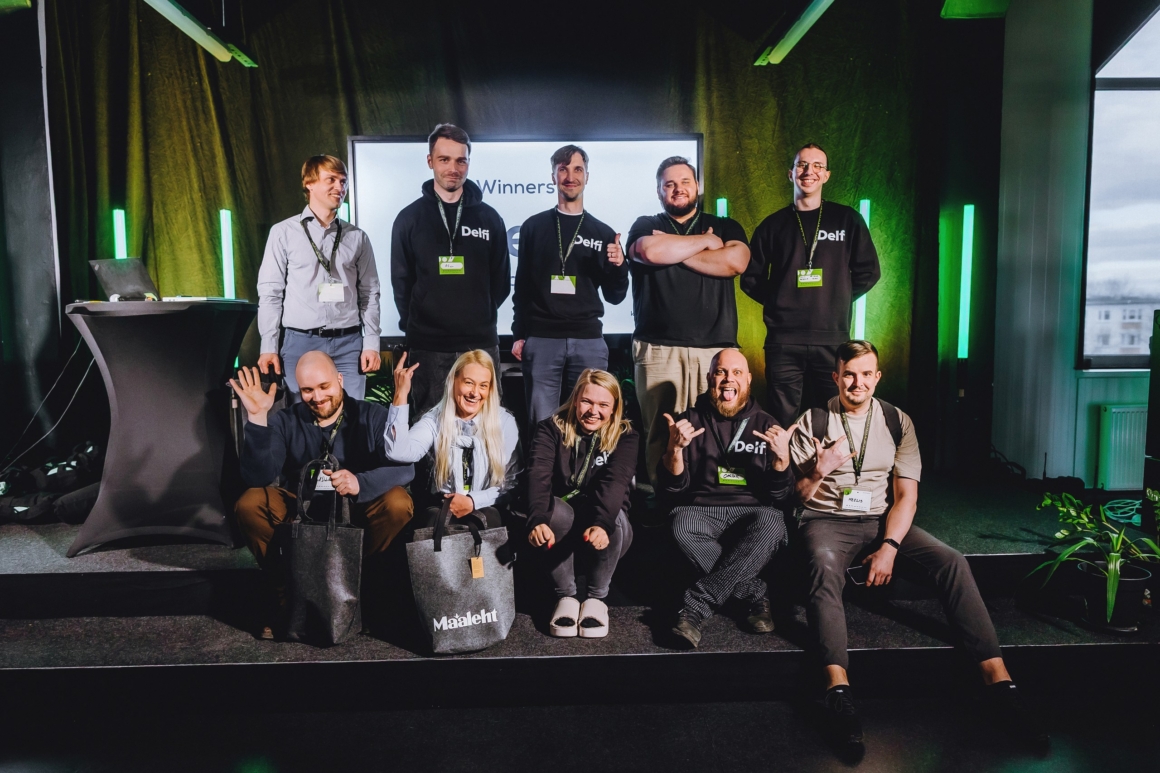
Last week, we brought together 200 future developers and several Estonia’s leading tech companies in Jõhvi for kood/JobFair. At the reimagined job fair, our alumni and students from Jõhvi, Võru and Paide were put to the test with technical challenges, giving them a chance to prove their skills and employers a direct look at today’s emerging tech talent.
A different kind of job fair
Traditional job fairs don’t reflect what working in tech is actually like. At //kood, we wanted to change that.
“Classic career fairs no longer accurately reflect real working life, nor do they give employers a clear enough picture of future candidates’ capabilities. We’ve reimagined the format to create value for both sides – giving participants a real-world experience while helping companies better understand the future workforce,” says Kätlin Merisalu, Head of //kood Learning Centres.
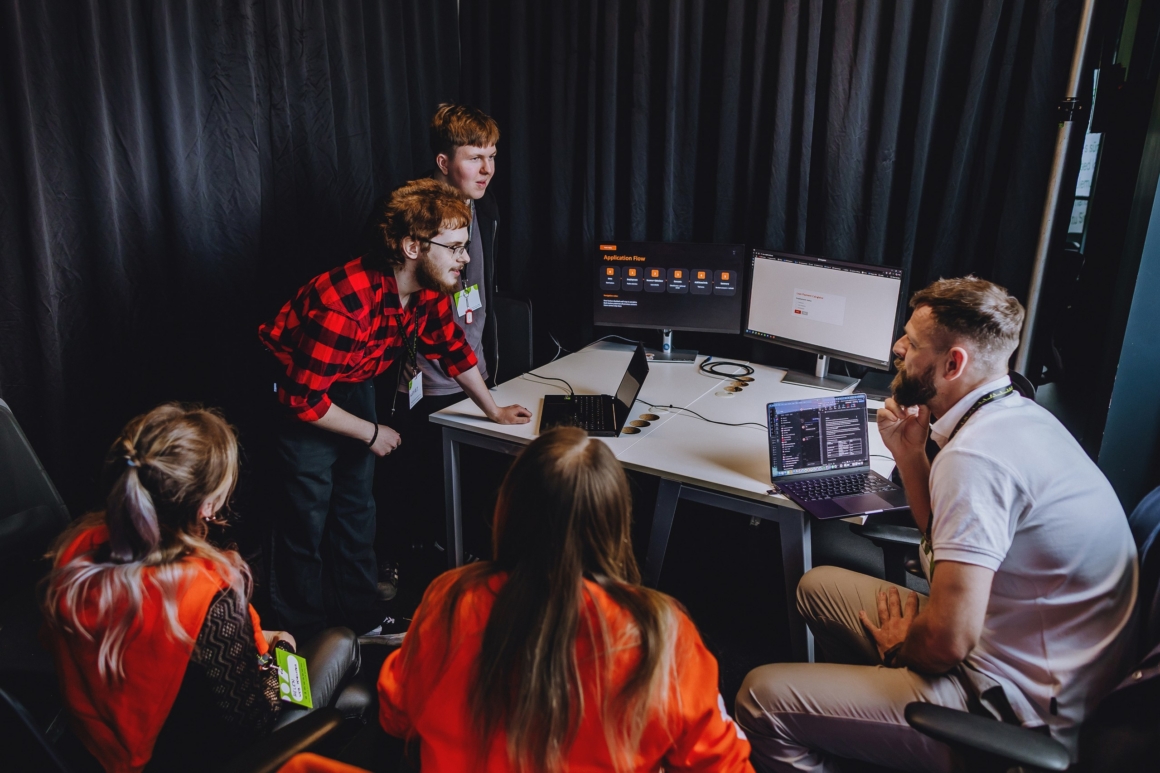
At the heart of the event were company-set technical challenges drawn from their day-to-day work. //kood students and alumni tackled the tasks in teams, then presented and defended their solutions on the spot.
Some of the real-world problems students worked on included:
- A parental benefit calculator (Helmes)
- An AI-powered negotiation agent (Pactum)
- A loan calculator application wizard (Swedbank)
- A crisis portal for infrastructure outages (Delfi Meedia)
- A pet registry prototype (REMITK)
- A sports data analysis and visualisation platform (Genius Sports)
Participating companies also included Bolt, SEB, Ericsson, SMIT, VKG, Finest, //kood and IDA Hub – representing a wide cross-section of Estonia’s tech industry.
More than just coding
Martin Villig, co-founder of both //kood and Bolt, set the tone in his opening remarks by emphasising that coding skills alone are no longer enough. “Writing code is the foundation, but being able to explain what you’re doing and why is just as important. The best developers don’t just complete assigned tasks – they ask what value they’re creating and whether the problem can be solved differently.” He added that today’s tech companies look for candidates who can think beyond the single line of code: “It’s important to understand the big picture – from the company’s goals to your own role within them.”
Companies noted that what stood out most in students was genuine curiosity, strong analytical thinking, and an understanding that a developer’s role goes beyond writing code. Also highlighted was a mature attitude toward AI – seen primarily as a value-adding tool rather than a replacement for developers.
Jelena Poleschuk, Tech Recruiter at software company Helmes, noted how naturally conversations moved beyond the code itself. “Discussions quickly progressed to the logic behind solutions, how systems work, and their real-world impact.” She added that while a strong technical foundation remains the primary requirement, standing out in a competitive field increasingly depends on the ability to learn independently, adapt, and connect technical decisions to business logic.
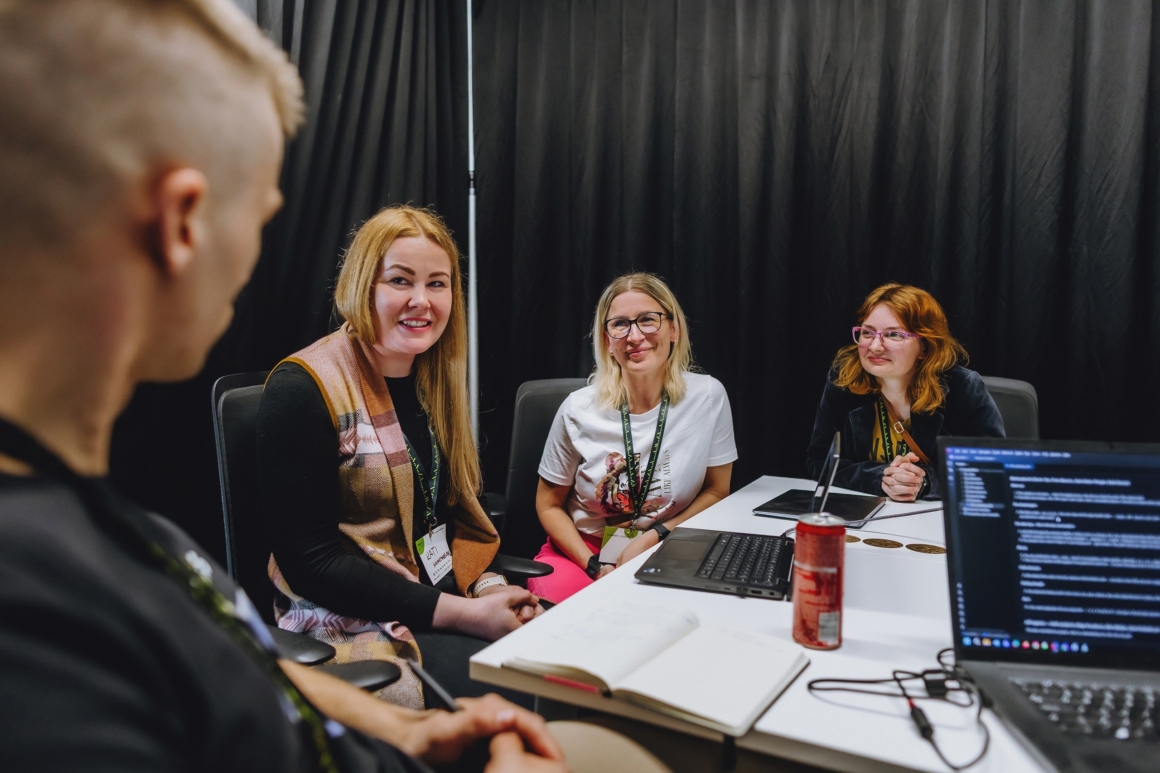
Marleen Saat, Senior Talent Acquisition Partner at AI negotiation software company Pactum, highlighted students’ high level of initiative and their thoughtful approach to AI. “Many already had independent projects, which shows a real readiness to grow. There was a clear understanding that AI doesn’t replace a developer – it’s a tool that helps create value.” Today, she says, the candidates who stand out are those who combine strong foundational skills with critical and intentional use of AI.
Kaisa Anier-Soost, Head of Product Development and Technology Area at SEB, was struck by the depth and breadth of students’ questions. “The interest wasn’t limited to technical topics, students also asked how teams work, what the organisational culture is like, and what values guide the company. That kind of attention shows that //kood students think constructively and understand the importance of broader context.”
For Viru Keemia Grupp, it was encouraging to see that many //kood students are career changers who connect their IT skills with prior experience. “In technical roles, we value learning ability and problem-solving skills just as much as technical know-how. AI supports recruitment, but what ultimately makes the difference is a person’s motivation and attitude,” says Tea Allikmäe, Labor Relations Manager at VKG.
//kood was founded in Jõhvi, Estonia in 2021, with the aim of making technology education accessible to everyone and address the software developers shortage. From 2025, students can study in Jõhvi, Võru and Paide. Its 12–15 month curriculum is based on 100% practical, self-directed and peer-to-peer learning, covering full-stack software development, teamwork and problem solving. Students can later specialise in fields such as cybersecurity, mobile applications, or AI.
//kood has welcomed more than 1,200 students in Estonia with close to 400 graduates – half of whom are now working in the technology sector. Students represent over 30 different nationalities, 21% are women and the average age is 29. You can find the //kood peer-to-peer learning method and curriculum also in Finland, Ukraine and Kenya.
In 2025, the Estonian Ministry of Economic Affairs and Communications recognised //kood as one of the best entrepreneurship promoters in the country.
The accessibility of IT education is supported by Skaala, Swedbank, Kaamos, LHV, SEB, Barrus and others.