Systems thinking, AI, and modern tech roles -kood/Cast ep 10
This episode of kood/Cast follows three perspectives on modern software work: leading large-scale organisational change, finding a personal path into tech, and building a learning platform used every day by students.
Together, these conversations reveal what sits beneath modern tech roles – systems that need to scale, infrastructure that must remain secure, products shaped by real users, and learning that happens through practice rather than theory. As AI becomes part of this landscape, the episode shows why understanding how things connect matters more than ever.
From e-government to AI-first company: Priit Kaasik from Katana on systems and transformation
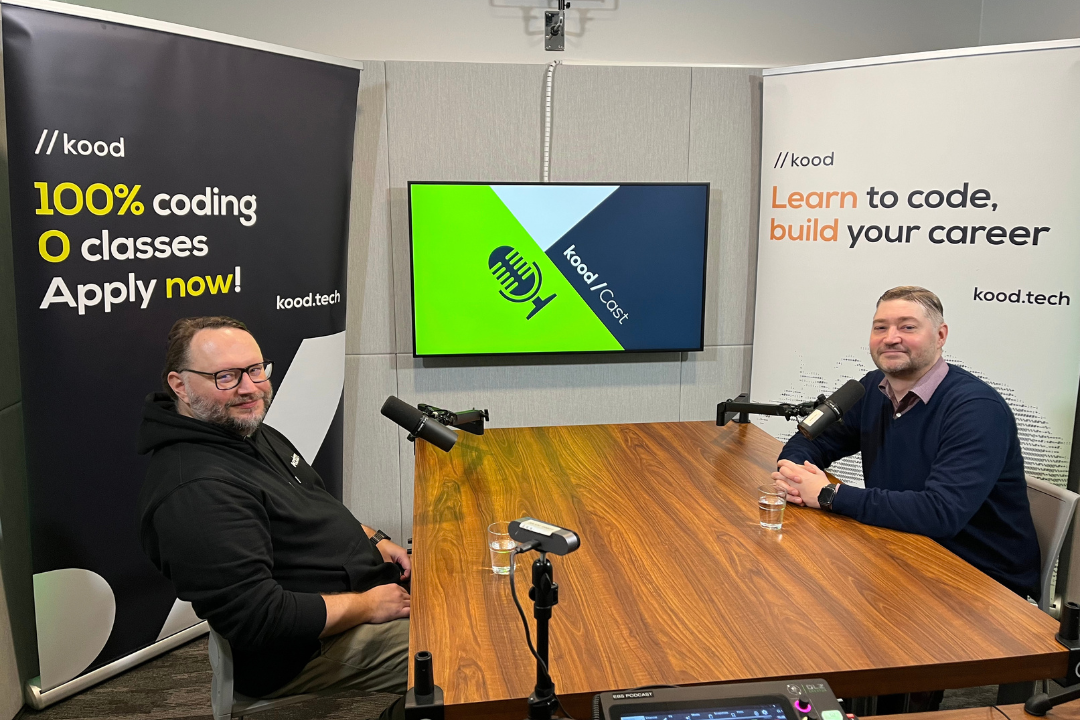
The episode opens with Priit Kaasik, CTO and Co-Founder of Katana, whose career spans from building Estonia’s first e-government systems to leading major transformations at Playtech, Skype, and now Katana.
Priit describes how his role has evolved from hands-on engineering into driving change, building teams, and designing systems that allow software organisations to scale, a shift that AI is now accelerating even further.
Key insights from Priit:
- Software work increasingly involves understanding how systems behave and interact
- AI is reshaping how developers, as well as engineers, approach problem-solving, planning, and execution
- Clear problem definition, modelling, and system awareness are becoming essential skills
He also challenges assumptions about seniority in tech.
“I have met a lot of senior developers who are really weak at modelling, abstract thinking, systems thinking, and architecture patterns. They are excelling at very simple implementation at great finesse but that finesse is not that important anymore.”
Finding your place in tech: Anton’s journey from HVAC to cybersecurity
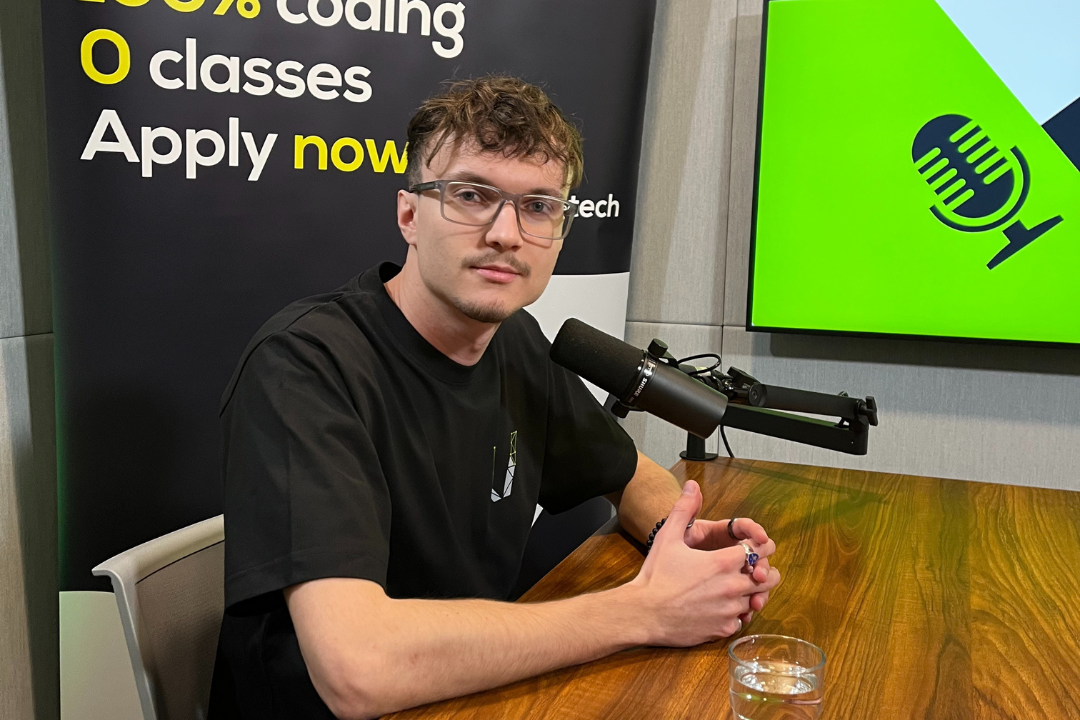
Next, we hear from Anton Urban, a kood/Jõhvi alumnus now working as a Security Engineer.
Anton’s path into tech was far from linear. Before joining kood/Jõhvi, he worked as an HVAC specialist and had no formal IT background. What drew him in was the peer-driven, hands-on learning method and the freedom to explore different areas of technology before committing to a single path.
During his studies, Anton realised that traditional software development wasn’t the best fit for him. Instead, cloud technologies, DevOps, and infrastructure sparked his interest.
What Anton took from kood/Jõhvi:
- A practical, problem-solving mindset
- Confidence to learn independently and adapt when plans change
- Exposure to multiple domains before choosing a specialisation
Today, Anton works with infrastructure security. He uses AI mainly for documentation, templates, and exploration, while remaining cautious about applying it directly in security-critical and infrastructure-heavy environments.
Developing the learning platform for students: meet Herman from //kood
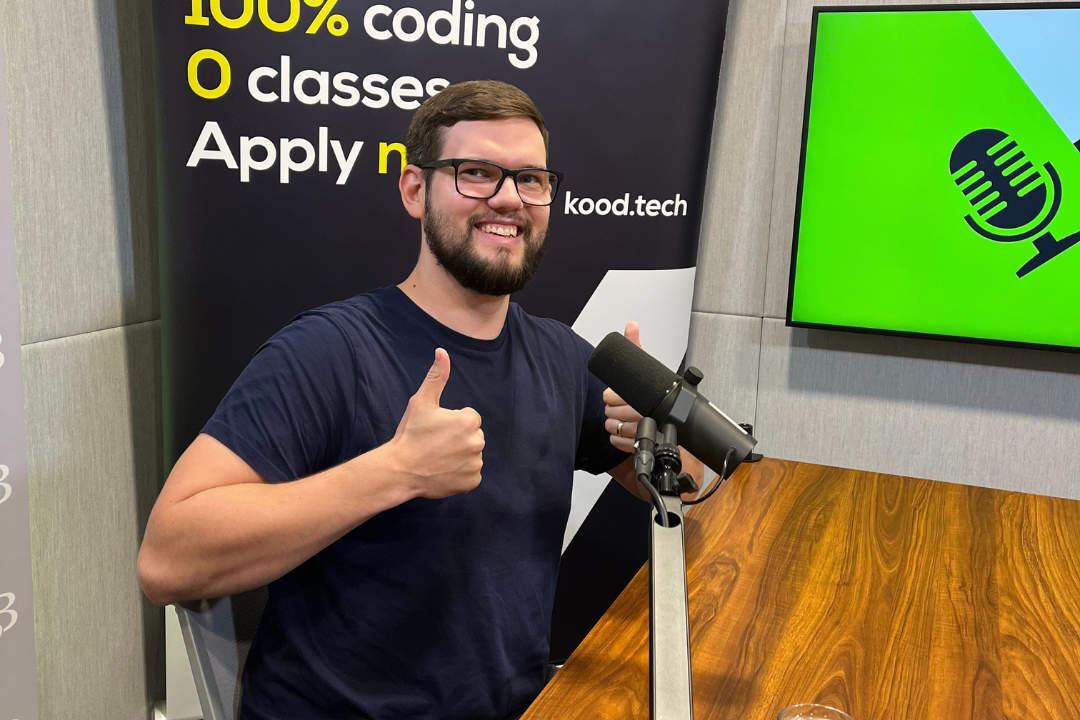
The episode closes with Herman Õunapuu, Senior Product Engineer at //kood who works on the learning platform used daily by students and school operators.
Herman explains that his role combines software engineering with product and system thinking focusing not just on features, but on how students and schools actually use the platform in real life.
He highlights that:
- Students regularly uncover edge cases no one anticipates
- Educational software must balance reliability, usability, and continuous improvement
- Feedback from students and school operators directly shapes development priorities
Herman also shares how AI has renewed his excitement for technology like automating repetitive tasks and speeding up experimentation while still requiring human judgment, responsibility, and care.
Outside of work, he maintains a personal tech blog (ounapuu.ee), which he treats as a deliberately AI-free space. Writing, experimenting, and thinking things through by himself is part of the enjoyment for him – a reminder that not everything needs to be optimised to be valuable.
Key takeaways from this episode
✔ Systems thinking is becoming part of everyday software work
✔ Exploring different tech domains helps people find where they truly fit
✔ Building products means understanding real users and real constraints
✔ The most valuable skill is learning how to learn continuously
🎧 Listen to the full episode on YouTube, Spotify, or Apple Podcasts
___
//kood was founded in Jõhvi, Estonia in 2021, with the aim of making technology education accessible to everyone and address the software developers shortage. From 2025, students can study in Jõhvi, Võru and Paide. Its 12–15 month curriculum is based on 100% practical, self-directed and peer-to-peer learning, covering full-stack software development, teamwork and problem solving. Students can later specialise in fields such as cybersecurity, mobile applications, or AI.
//kood has welcomed more than 1,200 students in Estonia with over 350 graduates – nearly two-thirds of whom are now working in the technology sector. Students represent over 30 different nationalities and 21% are women. You can find the //kood peer-to-peer learning method and curriculum also in Finland, Ukraine and Kenya.
In 2025, the Estonian Ministry of Economic Affairs and Communications recognised //kood as one of the best entrepreneurship promoters in the country.
The accessibility of IT education is supported by Skaala, Swedbank, Wise, Kaamos, LHV, SEB, Barrus, SA Võrumaa Arenduskeskus, SA Järvamaa, ESTDEV and others.